
Quick Links
Adult Lifestyles
More adults are told by a health provider to “reduce stress,” along with being more active and eating healthier.
Told to Reduce Stress
2021
25%

2026
31%
Has a doctor, nurse, or other health professional told you in the past 12 months that you should:
- Drink less alcohol
- Eat more fruits/vegetables
- Get more physical activity
- Get more sleep
- Reduce stress
- Stop smoking/use less tobacco
Survey Question
Why this matters?
Positive lifestyle choices include meeting recommendations for physical activity, eating fruits and vegetables, and sleep. It’s equally important to address habits with negative health impacts, such as unmanaged stress, tobacco use, and excessive alcohol consumption. Life decisions that practice both avenues support long-term health and well-being.
*See Methods for details on low-income thresholds, methodology, and limitations
Alcohol Use
Binge drinking rates overall are down in the region, but remain higher than the national average. Binge drinking rates are higher among men, young adults, and those with higher incomes.
Binge Drinking
2021
29%

2026
26%
Considering all types of alcoholic beverages, how many times during the past 30 days did you have [5 for men, 4 for women] or more drinks on an occasion?Survey Question
Why this matters?
Excessive alcohol use is a major contributor to illness and early death. Nationally, excessive alcohol use causes over 95,000 deaths annually—about 261 per day—making it a leading preventable cause of death.
Binge drinking is defined as four or more drinks for women or five or more for men on a single occasion. Drinking is normalized especially for younger ages – but it’s risky. Short-term risks include injury, violence, alcohol poisoning, and pregnancy complications, while chronic misuse can lead to liver disease, digestive problems, certain cancers, and mental health issues.
Though binge drinking rates are still higher here than in the U.S. (roughly 17%), there’s good news. Rates of binge drinking have decreased (26% current, 29% in 2021).
*See Methods for details on low-income thresholds, methodology, and limitations
Nutrition
Obtaining fresh produce remains difficult for about one-fourth of the region. Low-income and minority residents face the biggest access barriers.
Unable to Purchase Fresh Produce
2021
23%

2026
21%
During the past 30 days, did you ever want to purchase fresh fruits and vegetables (not canned or frozen) but were unable?Survey Question
Why this matters?
Good nutrition is a cornerstone of health for all residents, ideally combining the consumption of nutrient-rich options with the limitation of unhealthy options. Recommended diets include vegetables, fruits, grains, dairy, and protein foods, with ample water and limited fats, sugars, and sodium, which can increase the risk of chronic conditions like high blood pressure, obesity, and diabetes.
Equitable access to healthy foods is vital to the region’s health, yet it remains a challenge for many residents. Adults in the region report eating vegetables about 9 times per week, nearly twice as often as fruit (5 times per week). Yet access plays a critical role—21% of residents wanted but were unable to purchase fresh produce in the past month. This challenge is more common among residents classified as obese (28%) compared to those at a healthy weight (21%).
65% of adults say they can “always” eat a balance of minimally processed foods like fruits, vegetables, whole grains, and lean proteins. However, there are disparities by income level.
Barriers are especially pronounced in “food deserts”—geographic areas with limited affordable, healthy food options often have higher percentages of low-income households. Evansville’s 47713 and 47710 zip codes contain food desert tracts. 52% and 36% of residents, respectively, reported difficulty obtaining fresh produce. Even where food is available, inexpensive fast food is often more accessible than nutritious options; on average, adults eat fast food twice per week. These realities highlight the connection between access and health. Progress can be made through local and mobile farmers markets, farm to table models, and efforts to expand healthier, affordable offerings in supermarkets, restaurants, and corner stores, moving the region closer to equitable access to nutritious foods.
Consuming fruits and vegetables are an important part of a healthy diet, as is the avoidance or minimal consumption of sugar. Residents unable to purchase fresh produce are more likely to consume sugar. On average, adults in the region consume high sugar food and beverages with low nutritional content 12 times per week, or close to twice a day.
*See Methods for details on low-income thresholds, methodology, and limitations
Physical Activity
More adults are meeting physical activity recommendations, and fewer are reporting sedentary lifestyles.
Physical Activity
2021
49%

2026
54%
During the past 30 days, how many times per week did you take part in physical activity or exercise?
When you took part in physical activity, for how long did you usually keep at it?
Survey Questions
Why this matters?
Regular physical activity supports overall health and reduces the risk of injury and chronic disease. Along with good nutrition, it’s one of the most effective behaviors to improve physical and mental well-being, including reducing symptoms of depression and anxiety.
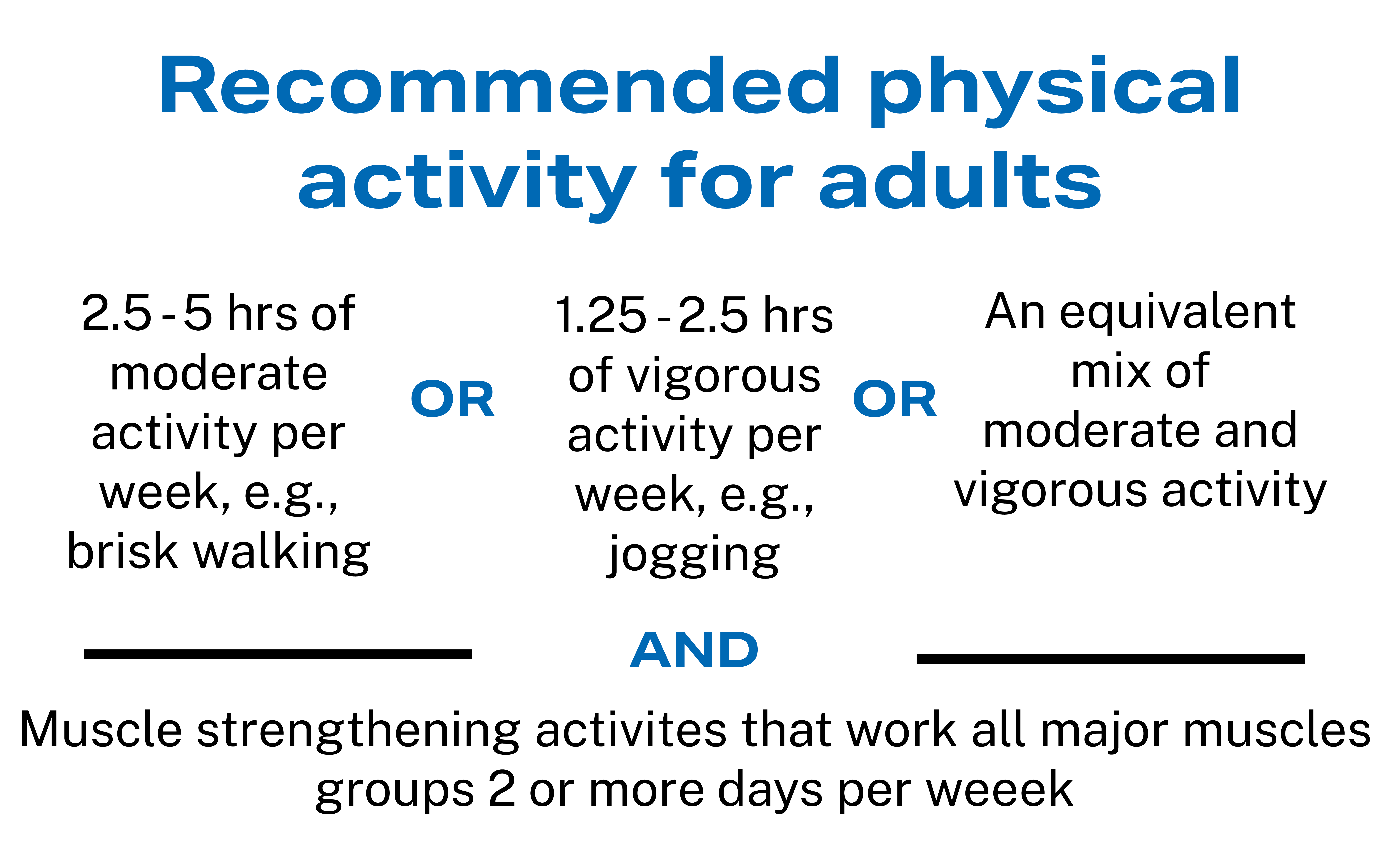
Both cardio and muscle-strengthening activities are recommended as part of overall health. This can include running marathons or mountain climbing – but activity even in small increments can effectively be built into your day, such as taking the stairs at work or home, or parking far away from and walking to your destination.
Regionally, more adults are meeting the CDC recommended physical activity guidelines (54% in 2026, 49% in 2021). Adults with a healthy weight are more likely to meet recommended guidelines (62%), but even 44% of those with an obese weight get recommended levels of physical activity. Adults are generally more active whether they meet the official guidelines – 88% engage in some level of physical activity compared to 84% in 2021.
In 2021, 16% of residents in our region reported a sedentary lifestyle, (no physical activity in the last month). In 2026, this rate is down to 11%.
*See Methods for details on low-income thresholds, methodology, and limitations
Smoking
Lower cigarette smoking rates are encouraging, but electronic cigarette use (e.g., vaping) is on the rise. Electronic cigarettes are more popular with adults under 40 years.
Cigarettes
2021
12%
2026
9%
E-Cigarettes
2021
1%
2026
9%
Do you currently smoke cigarettes?
Do you currently use electronic cigarettes (e.g., vaping)?
Survey Questions
Why this matters?
Smoking is the leading preventable cause of disease and early death and has an impact on the individual smoker and their entire household. Smoking damages nearly every organ, is harmful to developing fetuses, and is linked to diseases including heart disease, stroke, asthma, lung disease, diabetes, and many cancers. Close to 500,000 deaths per year are attributable to smoking with around 40,000 due to secondhand smoke. Smoking is also costly -over $600 billion per year in the U.S., in healthcare costs and lost productivity.
While cigarette smoking is trending down – the use of electronic cigarettes (e-cigarettes) or vaping, is sharply rising. E-cigarette use is rising among middle and high school youth and is now the most common tobacco product for this group. While the long-term effects of cigarettes are well documented, e-cigarettes are still being studied. Public health agencies warn that vaping increases the chance that young people will later try combustible cigarettes. There is growing evidence linking e-cigarette use to respiratory symptoms (cough, wheeze, asthma exacerbations) and to markers of vascular dysfunction; newer studies even show associations between vaping and chronic lung disease outcomes such as COPD, although causation and long-term risks remain under study.
Tobacco use puts residents and their households at risk for serious health consequences. Avoiding tobacco altogether remains the best prevention strategy, as damage to the body can start to occur quickly and quitting can be challenging. See also Respiratory Illnesses & Disease, and Child Asthma sections.
*See Methods for details on low-income thresholds, methodology, and limitations

The 2026 edition of the Greater Evansville Health Survey is a product of Welborn
in partnership with Diehl Consulting Group and Liz Tharp Consulting. View the survey methodology.