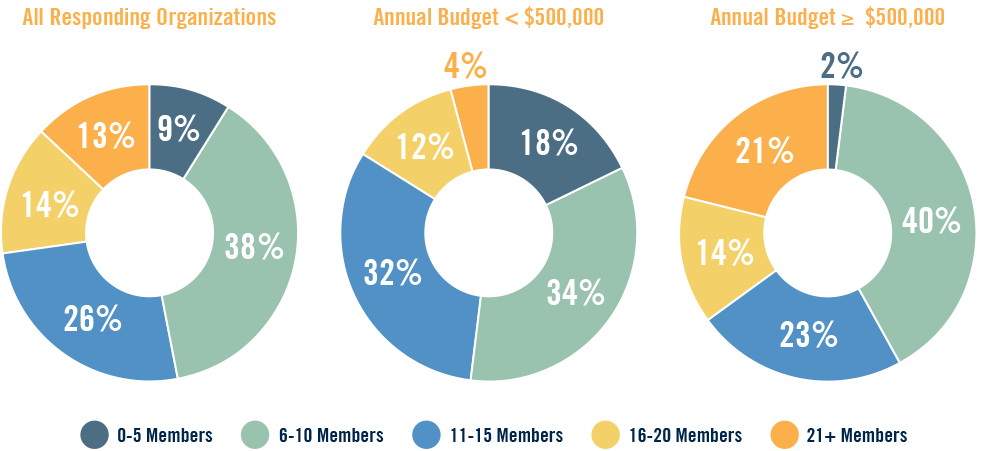
Organizations with larger operating budgets tend to have larger governing boards.
Nonprofit organizations rely on volunteer boards to guide their mission of serving the public good. Though nonprofits have a range of board sizes, larger nonprofits tend to have larger boards. For example, 35% of larger organizations have at least 16 board members, compared to 16% of smaller organizations. Board sizes overall are smaller than they were in 2018. In 2018, 64% of all nonprofits had less than 15 members on their boards, compared to 73% today.
Q: How important are the following criteria for recruiting board members?
Four out of Five nonprofits say a potential board member’s “willingness to give time to the organization” is a very important consideration.
The majority (79%) of surveyed nonprofits find it very important to consider a candidate’s willingness to give time to their organization before adding them to the board. In addition to time commitment, opportunities exist to consider factors like specialized skills and access to personal or donor resources candidates can bring to the organization. Overall, half (51%) of all nonprofits consider specialized skill sets, while only a third (32%) consider access to personal or donor resources very important.
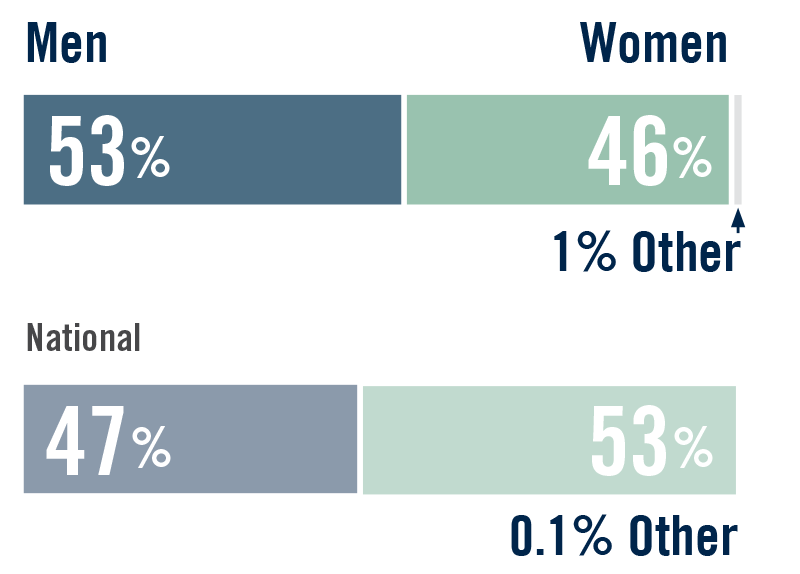
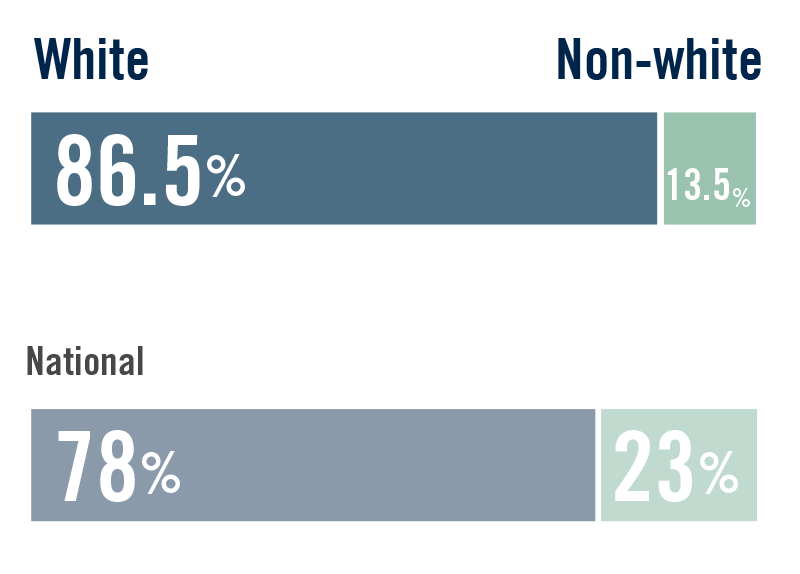
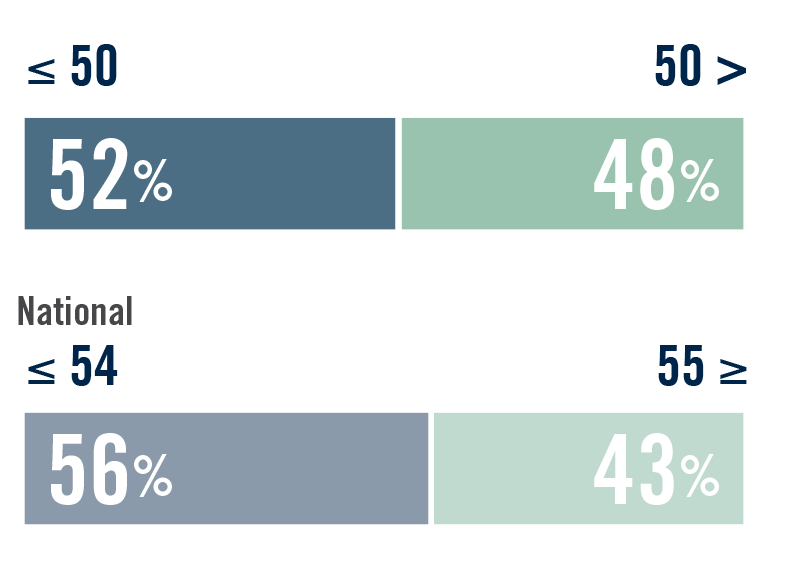
Local boards are becoming more diverse over time.
Compared to the nation, surveyed nonprofits have slightly more male than female members and slightly less racial/ethnic diversity. However, this diversity has shifted notably locally over time. In local nonprofit boards, 14% of members are non-white, compared to 8% in 2018.
The national source has changed the way they break down age groups, so ages cannot be directly compared. We can see a very slight shift in our local age trends with 50% of board members 50 years old or younger, compared to 52% now.
Q: Please describe the composition of your board:
(men, women, other)
Q: Please indicate how many of your board members indentify as:
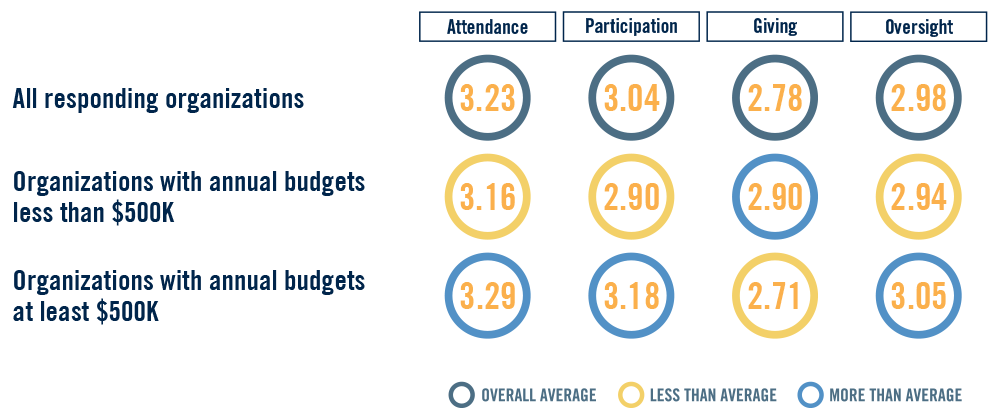
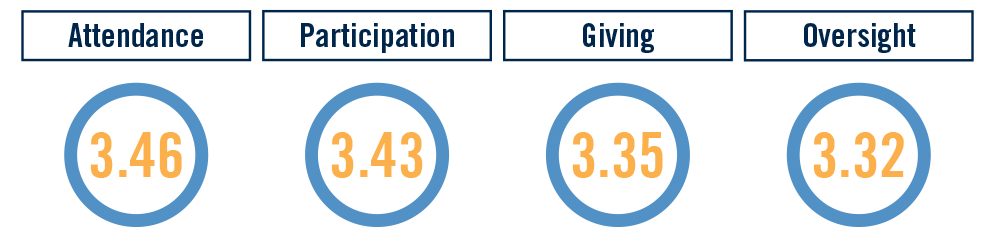
Q: How would you rate your board’s level of engagement in attendance, participation, giving and oversight?
(4-point scale: not engaged, somewhat engaged, engaged, very engaged)
Nonprofits have varying levels of Board engagement – Especially by budget size.
Regular attendance, participation, monetary giving and organizational oversight are different ways members can be engaged on a board of directors. Data suggests that the level of board engagement varies by budget size, with larger nonprofits reporting higher levels of board engagement in all categories except for giving. Financial giving by board members of smaller organizations is above average, but below average in larger organizations.
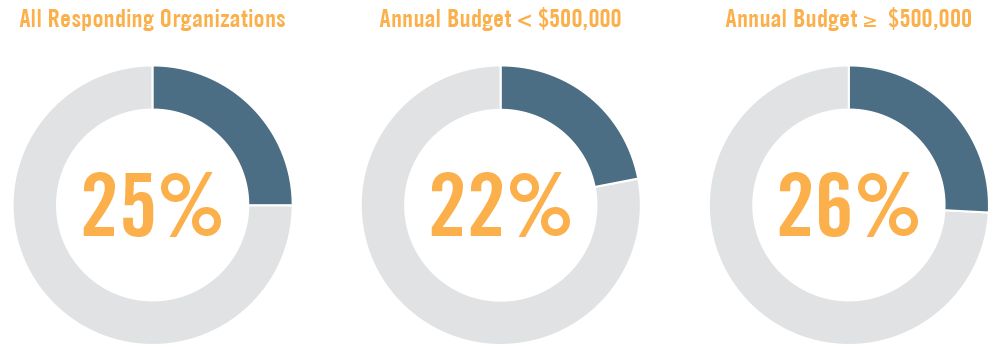
Q: Does your organization’s leadership ask board members to develop a personal plan of involvement?
On Average, one-quarter of nonprofits utilize personal plans of involvement to increase member engagement.
A personal plan of involvement (PPI) is an individual plan of expectations to be fulfilled by each board member. This individual plan for maintaining board productivity and engagement is often used for self-assessment and individual growth. On average only 25% of nonprofits currently utilize PPI’s with their members.
Opportunity exists to cultivate board relationships by using personal plans of involvement.
Across all sizes of nonprofits, when board members have personal plans of involvement in place, board members are much more engaged.
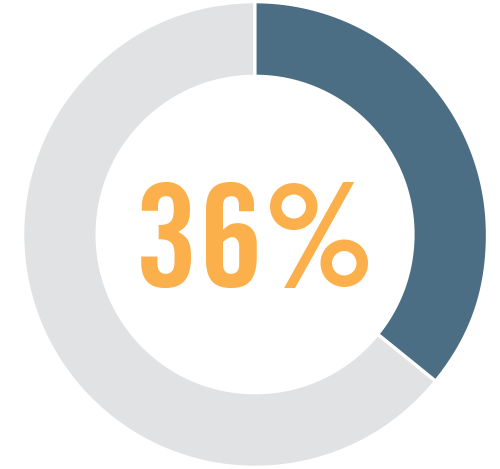
36% of regional nonprofits say their board is “very engaged.” Regardless of PPI usage, a little over a third of board members are very engaged in their role.
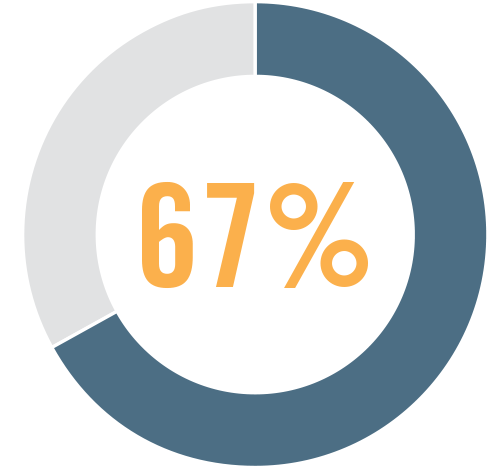
67% of nonprofits whose board members have an agreed upon PPI in place say their board is “very engaged.” The use of PPI’s appears to positively relate to higher levels of board engagement.
Across all four important indicators of member engagement – attendance, participation, giving and oversight – engagement scores are much higher than average when boards use PPIs with their members.