Convening for Change: How Collaboration Helped Improve Outcomes for Mothers and Babies in Southwest Indiana
A decade ago, infant mortality remained one of the most persistent health challenges facing Vanderburgh County and the surrounding region. The issue was complex, influenced by healthcare access, education, economic stability, housing, nutrition, and countless other factors that shape a family’s ability to thrive.
Community leaders understood an important truth: no single program or organization could solve the problem alone.
The Vanderburgh County Health Department was among the first organizations to take significant action, developing the “Pre to 3” home visitation program to support families during pregnancy and early childhood. At the same time, healthcare providers, nonprofits, and other community partners were each working to address different aspects of maternal and infant health. What was needed was not necessarily more people working on the issue—it was stronger alignment among those already committed to it.
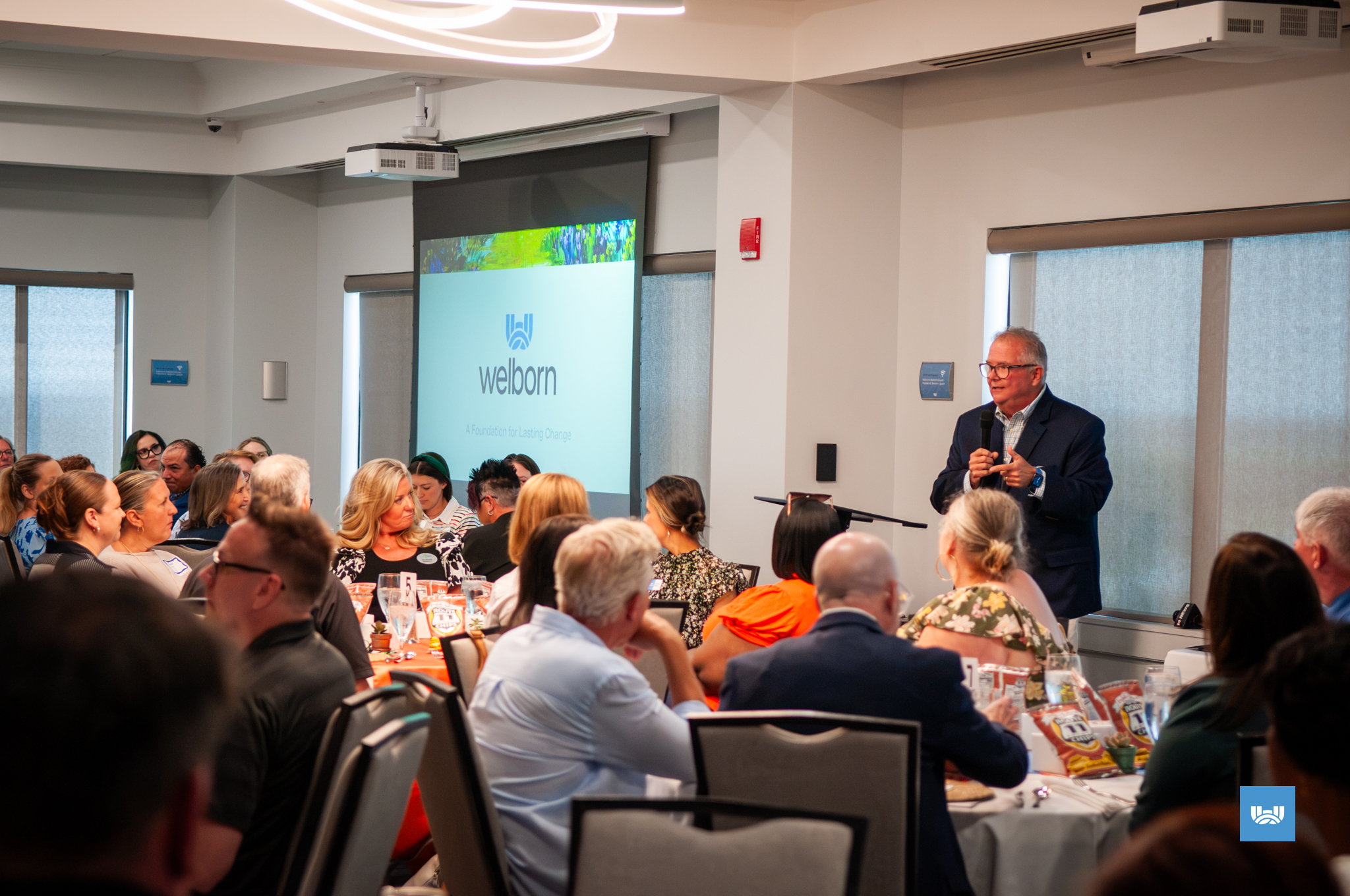
Through the Talent EVV Live Well initiative, Welborn served as the lead convener for a community-wide effort focused on improving health outcomes. Rather than creating a new standalone program, Welborn helped bring together public health leaders, healthcare systems, nonprofits, and community organizations around a shared goal: improving outcomes for mothers and babies.
Early on, Welborn served as both convener and backbone organization, helping partners establish a common strategy, identify measurable priorities, and coordinate efforts across organizations. Meetings were facilitated, ideas were translated into action plans, and partners were connected to resources and one another. Most importantly, organizations that had often worked independently were given a structure for working together.
What emerged was a growing network of partners committed to addressing infant mortality from multiple angles.
Over time, that collaboration helped strengthen and expand home visitation services, increase early identification of high-risk pregnancies, improve access to prenatal care, and reinforce education around safe sleep practices. Partners also worked to address broader social determinants of health, recognizing that healthy pregnancies are influenced by far more than medical care alone.
One of the most visible examples of this collaborative approach was the creation of the Ronald McDonald House Charities of the Ohio Valley CareMobile, funded in part by Welborn. Developed through conversations among multiple community partners, the CareMobile was designed to bring prenatal screening, resources, and connections to care directly into neighborhoods—reducing barriers to access and building trust with families earlier in their pregnancy journey.
None of these efforts operated in isolation. Families encountered consistent messages and support through healthcare providers, public health programs, home visitation staff, and community organizations. Each initiative reinforced the others, creating a more coordinated system of care for mothers and babies.
Over time, that alignment began to produce measurable results.
Today, Vanderburgh County has achieved its lowest infant mortality rate in a decade, while the broader region has reached its lowest rate in five years. While many years of investment and effort contributed to this progress, community leaders point to the growing coordination among partners as a critical factor in accelerating change.
Just as significant as the outcome itself is how the work has evolved.
What began as a strategy team convened by Welborn through Talent EVV has grown into a broader Community Action Team, now led by the Vanderburgh County Health Department and supported by healthcare providers, emergency responders, nonprofits, and other community stakeholders. The leadership of the work increasingly resides within the community-wide partnership itself—a sign that the collaborative infrastructure built over the past several years is becoming self-sustaining.
Welborn continues to participate as a connector, partner, and strategic supporter, helping maintain relationships and advance opportunities where it can add value because there is still much to do.
Policy changes, funding shifts, and new challenges facing families continue to emerge. Community leaders are already exploring how to better connect successful early childhood interventions with high-quality early education opportunities, ensuring children and families remain supported long after birth.
Yet the progress achieved so far offers an important lesson.
Lasting change rarely comes from one organization acting alone. It happens when committed partners share a vision, align their efforts, and stay at the table long enough to see results.
The decline in infant mortality is more than a statistic. It is evidence of what becomes possible when a community chooses collaboration—and when organizations are willing to invest not only in programs but also in the relationships and systems that enable long-term progress.